Six links, no gaps

Each step is ordinary
physics

Put end to end, they produce a thing that can ask what it is. Every figure below is from
the book; the numerals are its chapters.

Six links, no gaps

Each step is ordinary physics.
Together they make a thing that asks what it is.

• 1

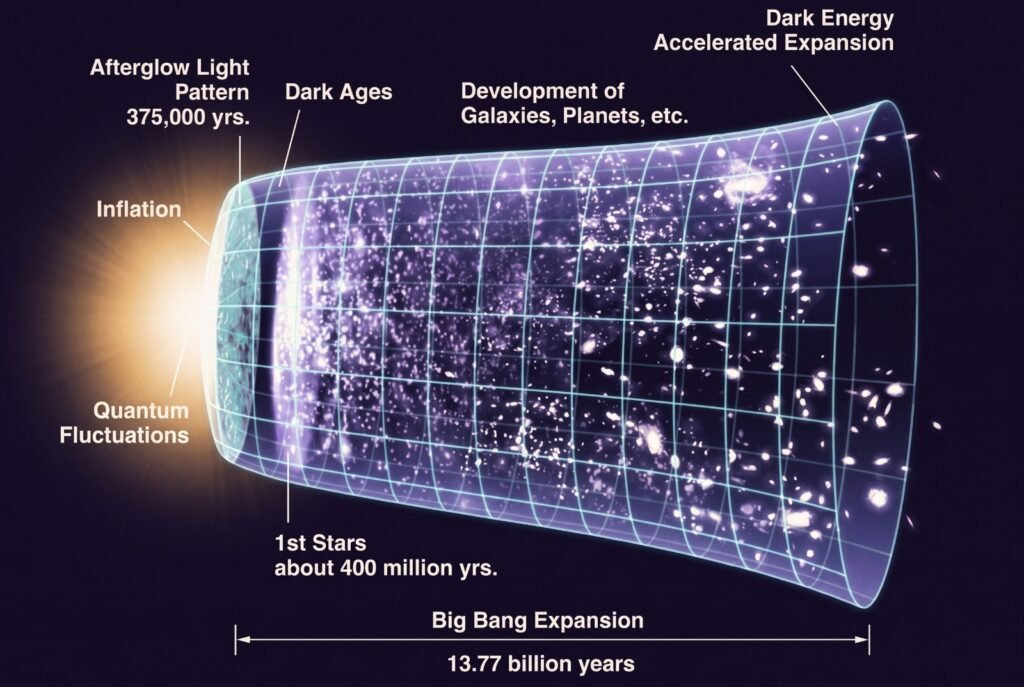
The whole span, in one frame

At this point, the universe holds hydrogen and helium, but none of the heavier elements from which a human body would eventually be built. These pristine gas clouds drifted through the vast cosmic dark until gravity gathered them into the first blazing stellar furnaces, where nuclear fusion finally forged the heavy atoms needed for life today.

• 2

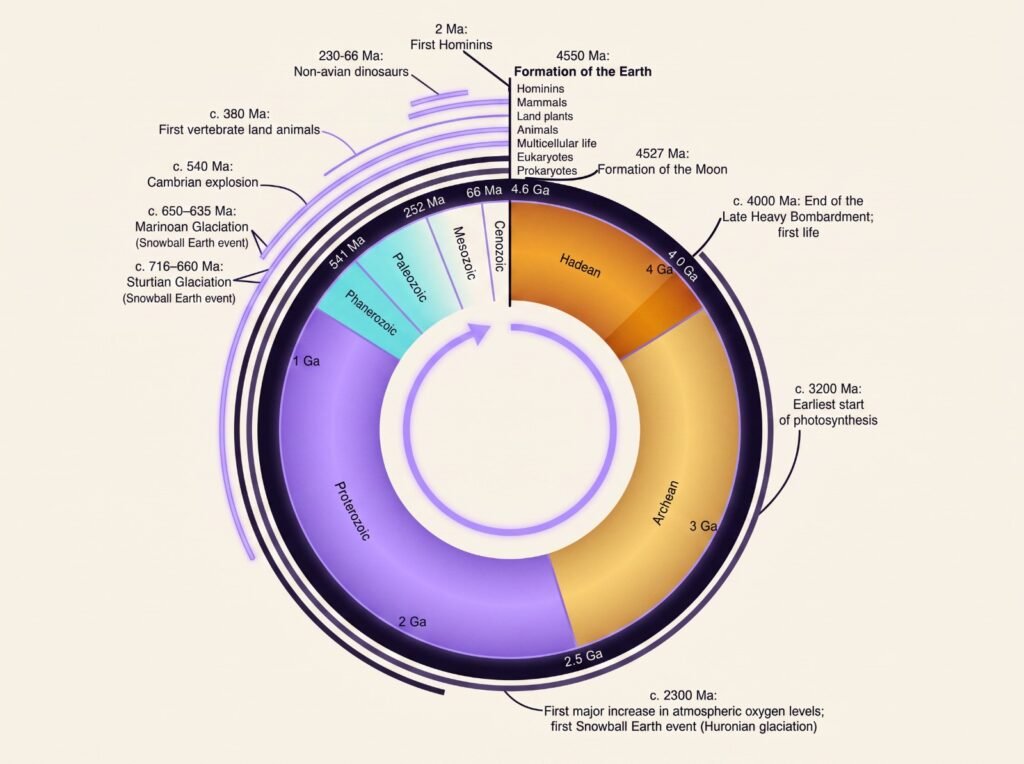
Earth keeps the receipts

Read this dial from the outside in and the whole planetary record is there: formation at 4,550 million years, the first life not long after, the oxygen crisis at 2,300, the Cambrian explosion at 540, hominins in the last sliver. Every heavy atom on it was manufactured inside a star that had already died. Earth is the debris, sorted and cooled.
• 3

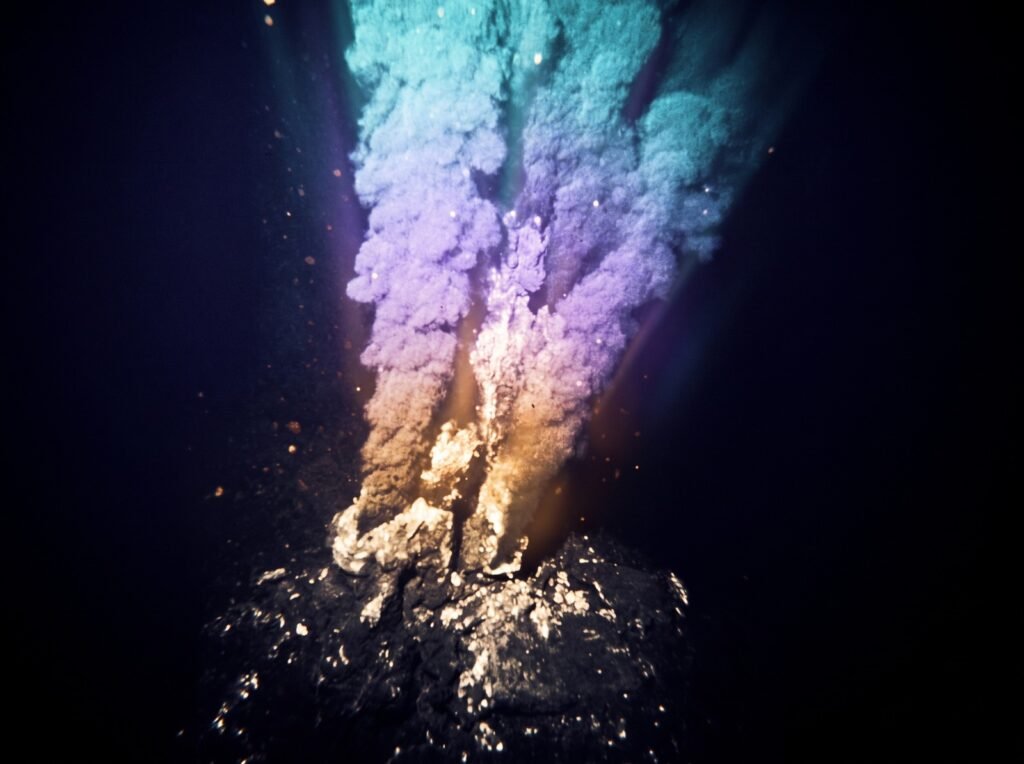
Chemistry finds a way to copy itself

A black smoker on the ocean floor: superheated mineral fluid meeting cold water, building chimneys and steep chemical gradients in permanent darkness. Vents like this are the leading candidate for where self-replicating chemistry got started. Life is not an addition to physics here — it is what certain chemistry does when it is left running.

• 4

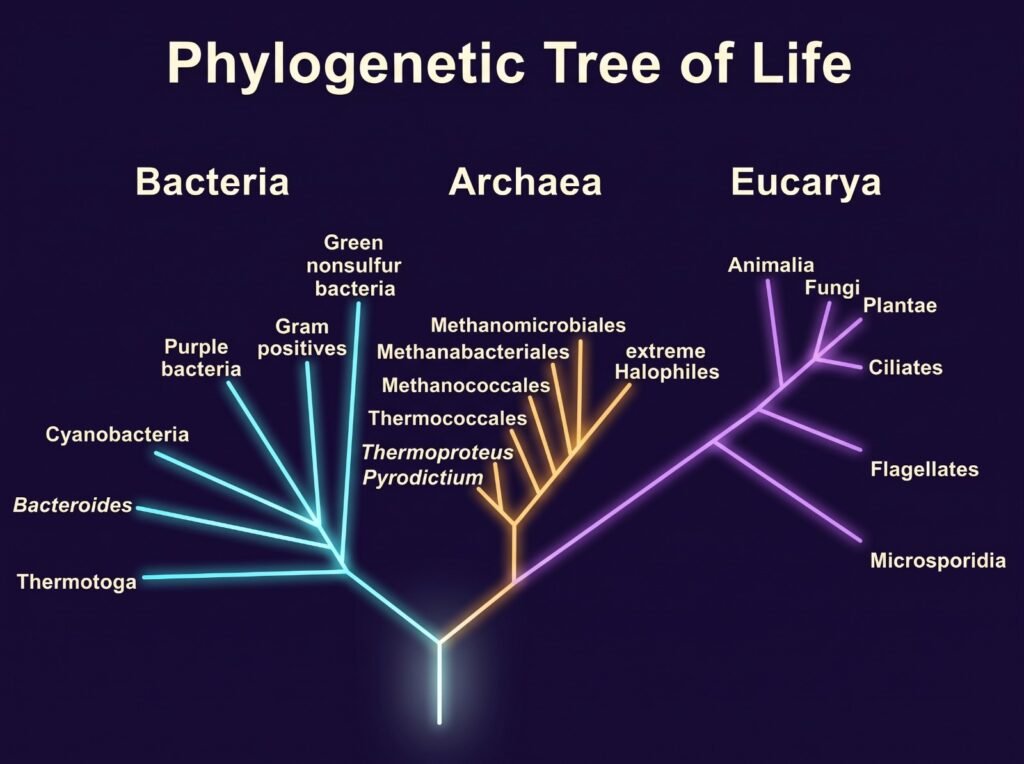
One family, no exceptions

Three domains, one trunk. Every organism alive — the bacteria in your gut, the archaea in a hot spring, you — traces back through this tree to a single common ancestor. There is no second origin on the diagram, and no branch that starts anywhere but here. The differences between kingdoms are differences of degree, arrived at by descent.

• 5

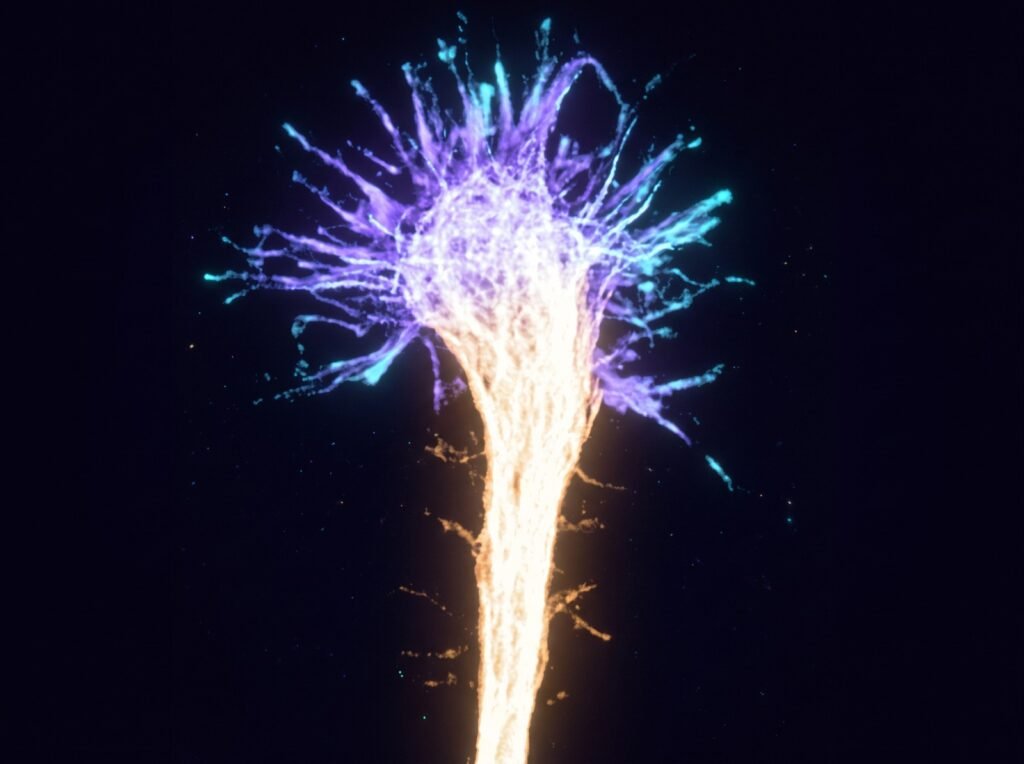
A brain wires itself in the dark

This is a growth cone: the searching tip of a growing nerve fibre, its filopodia reaching outward for a target it has never encountered. Multiply it by a peak rate of roughly a quarter of a million neurons a minute, in a skull, before birth, with no instruction from the outside world. Experience does not switch on at delivery. It fades in.

• 6

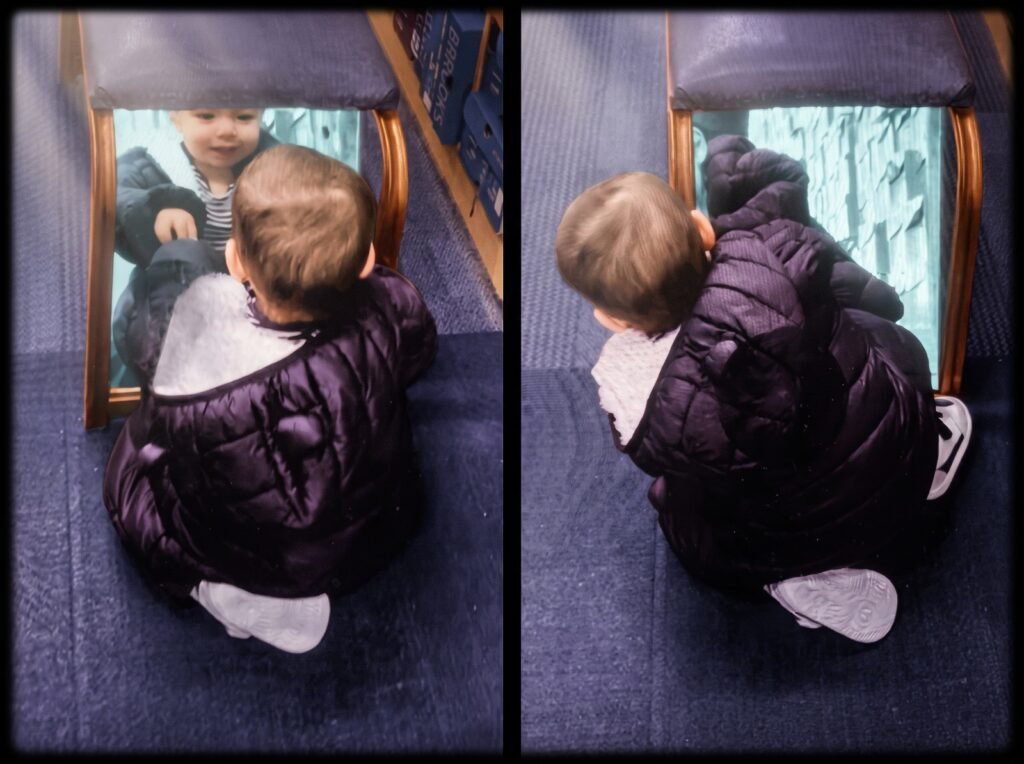
Someone recognises themselves

Two frames, seconds apart. An infant meets a mirror and, at around eighteen months, something changes: the reflection stops being another child and becomes me. It is one of the few moments in development where the arrival of a self can actually be photographed.  Nothing mystical was added. Something enormous was still produced.

The whole chain is in the book.

Twelve chapters, from the first atoms to an adult self, with the evidence for each link laid out in order.